Mythologia Fennica Tarot
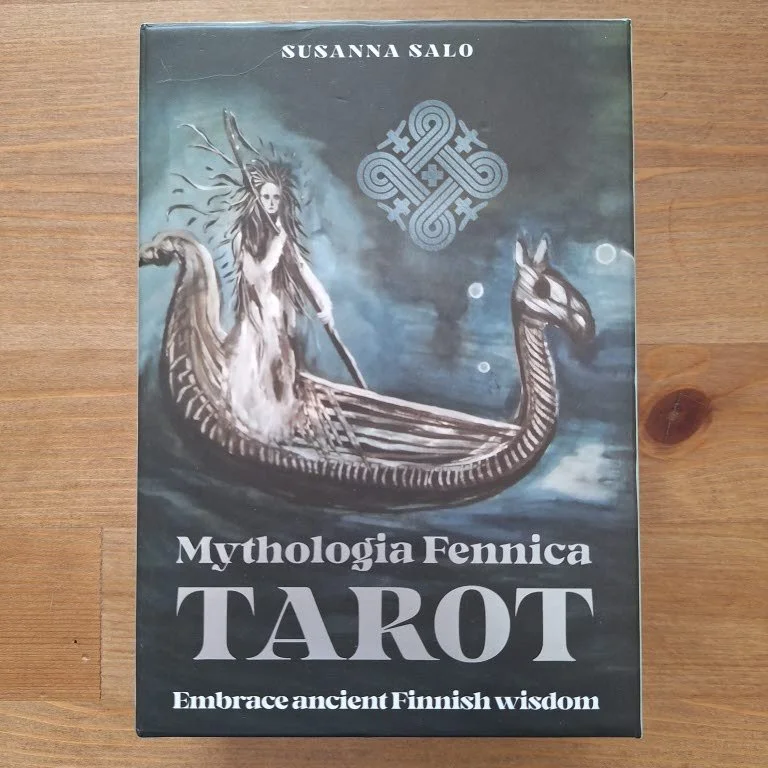
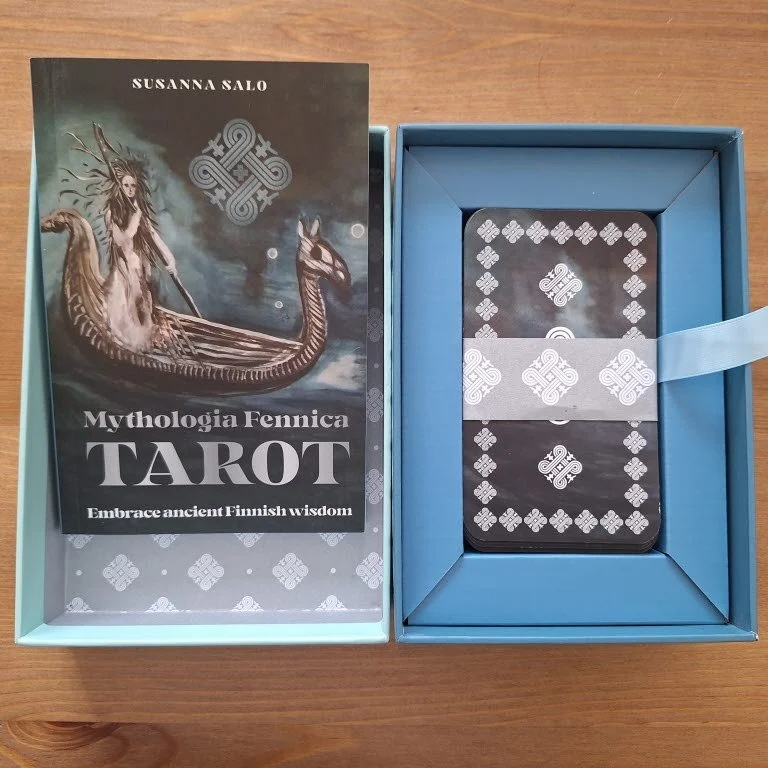
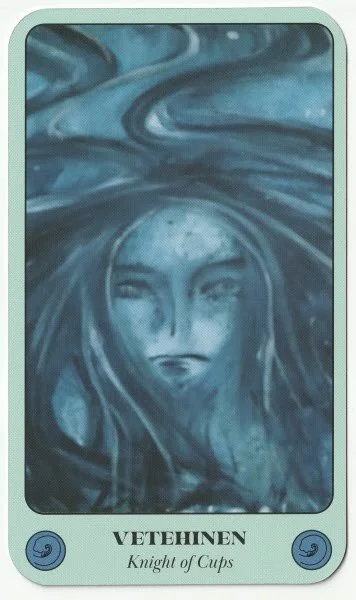
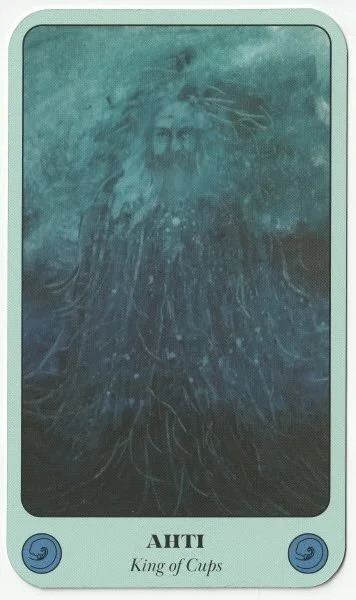
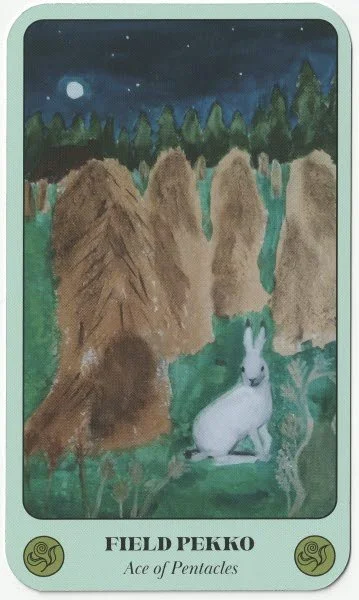
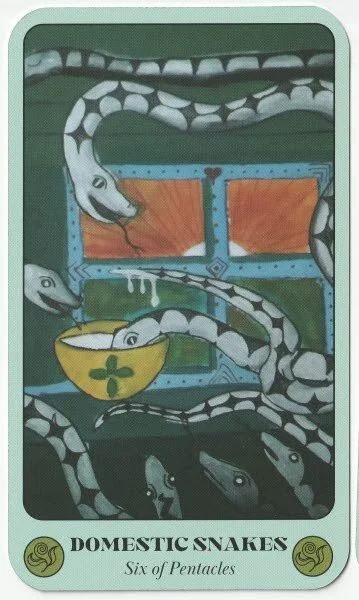
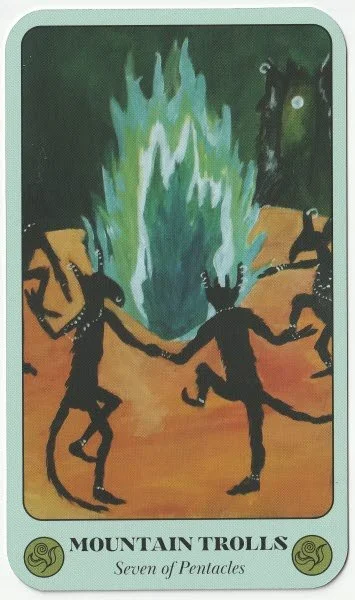
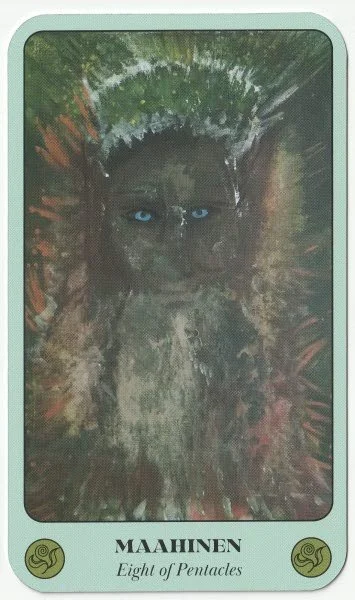
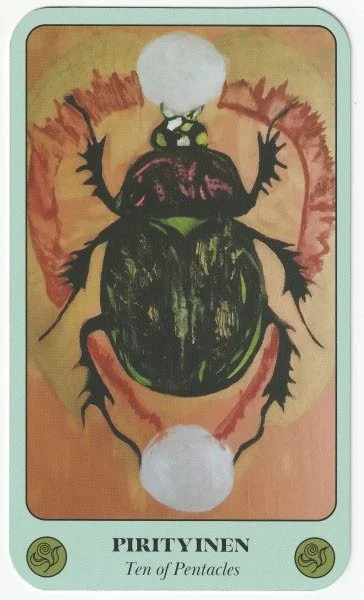
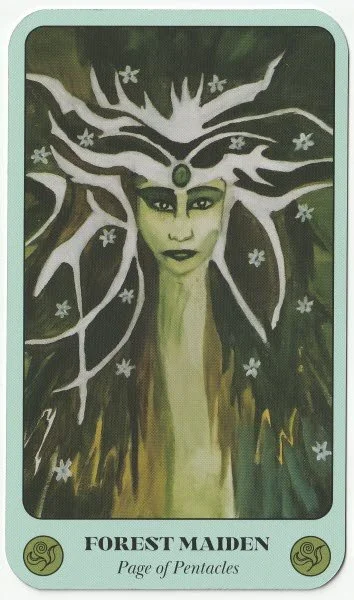
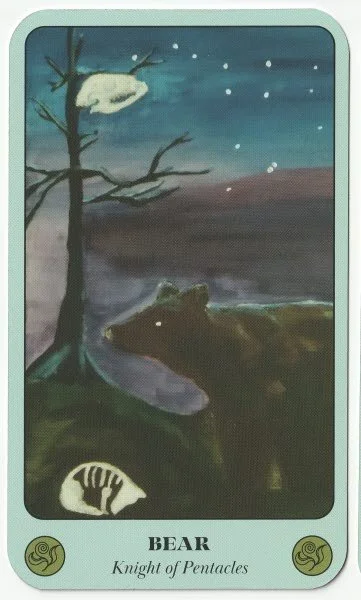
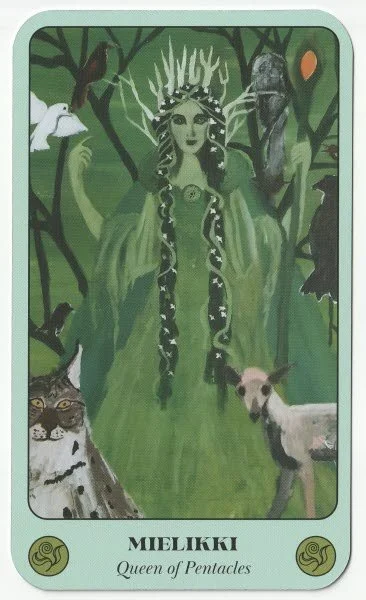
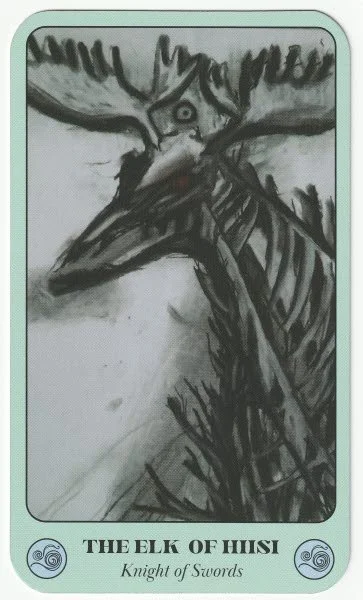
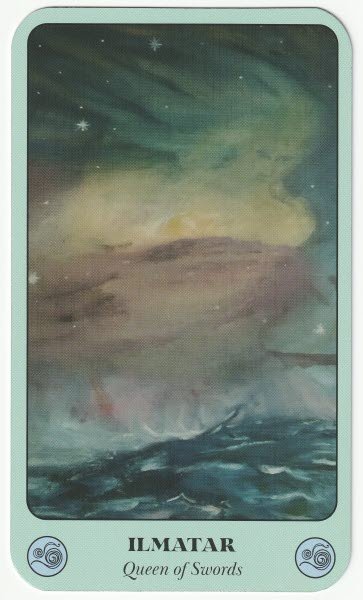
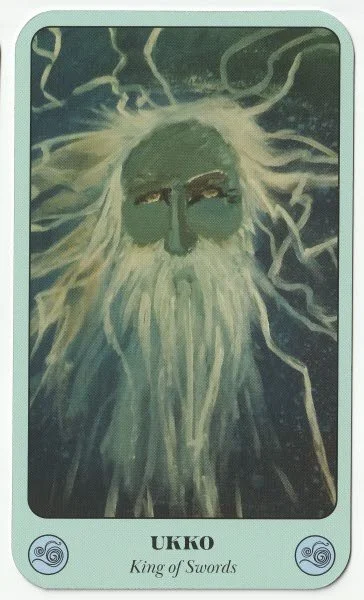
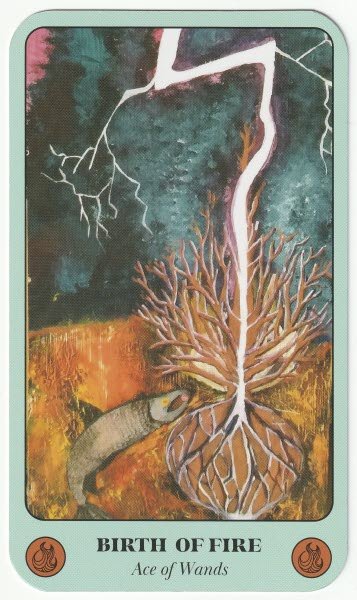
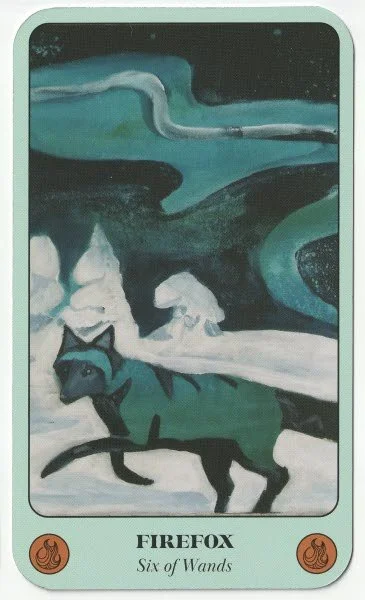
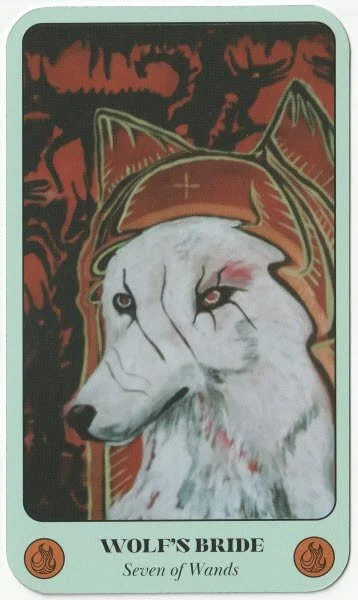
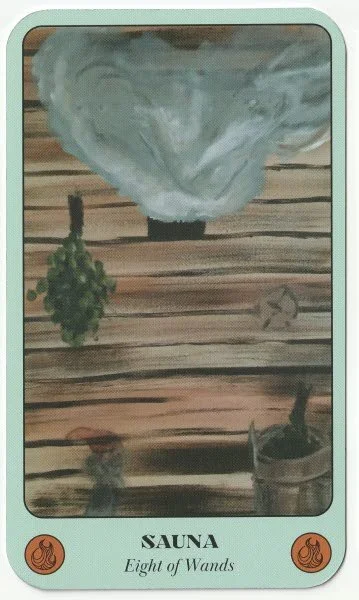
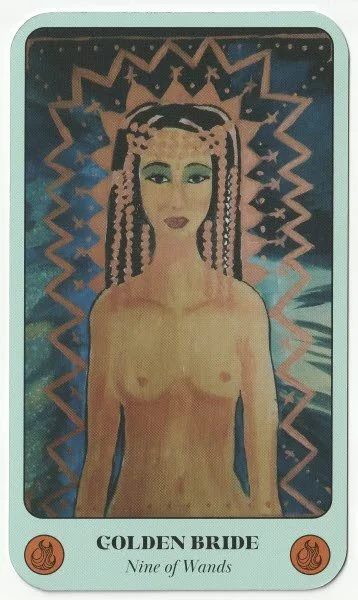
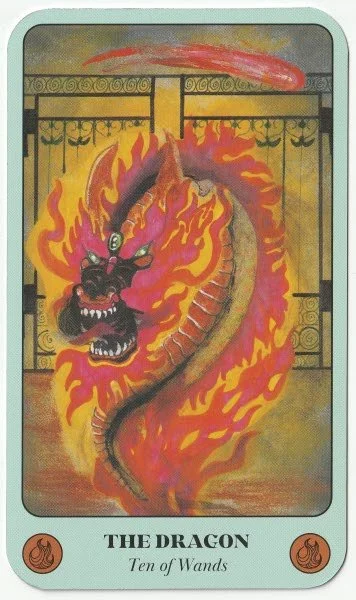
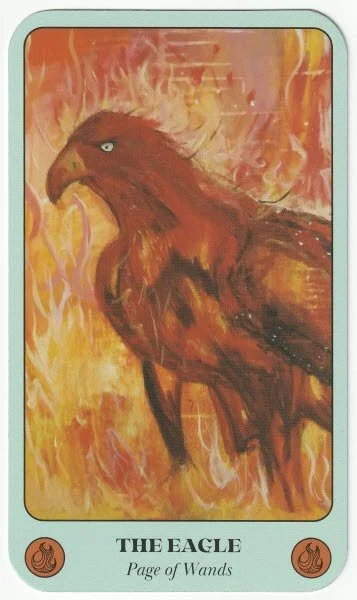
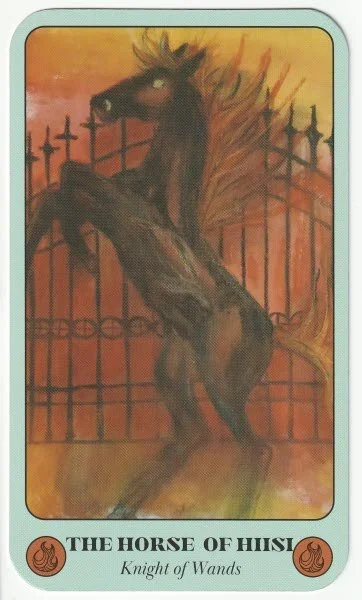
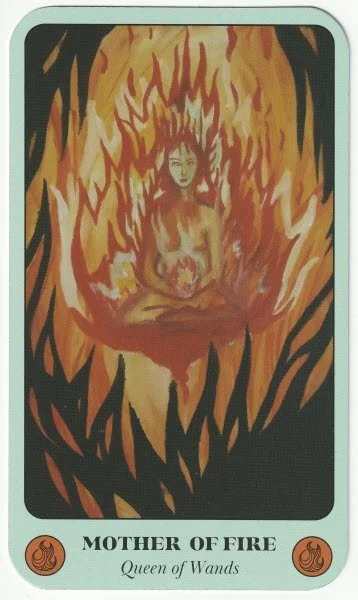
The Mythologia Fennica Tarot is a Finnish folklore-inspired deck created by Susanna Salo. Published in 2024, it comes in a sturdy box and has a relatively chunky guidebook. The cards have a matte finish and silver-gilded edging. The cardstock is pretty thin, but they’re not flimsy. I was drawn to the artwork and have an interest in folklore, so it was a no-brainer, really. The deck was originally published in the Finnish language under the title of Ukon Pakka-Kalevalainen tarot. It’s a well-priced deck with an R.R.P of £23.99, and Amazon currently have it on sale for £20.17. Apologies upfront if this review seems fragmented in places, but I’m itching to shuffle the deck and do myself a reading. If I don’t do the post first, I’ll end up getting carried away with working with the cards, and I won’t want to switch back into critique mode.
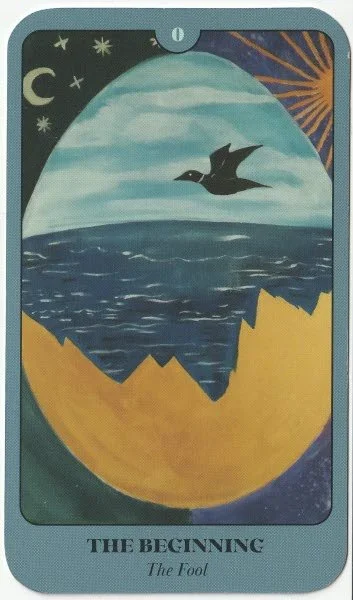
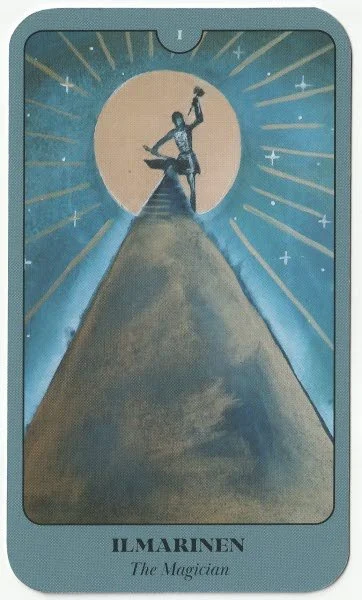
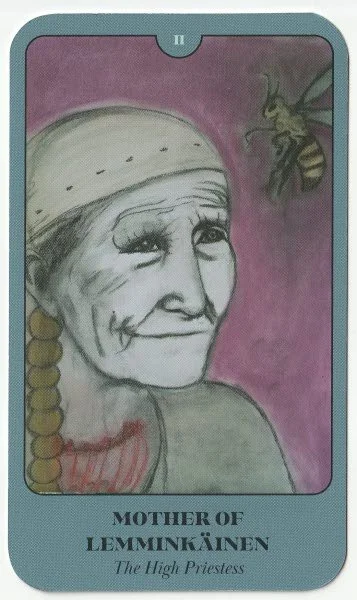
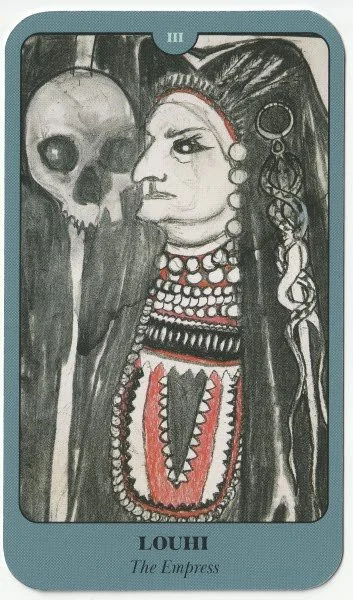
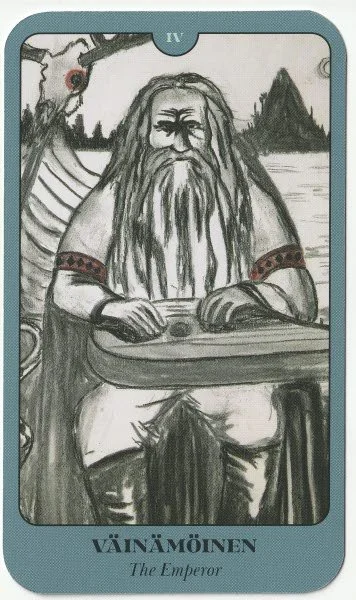
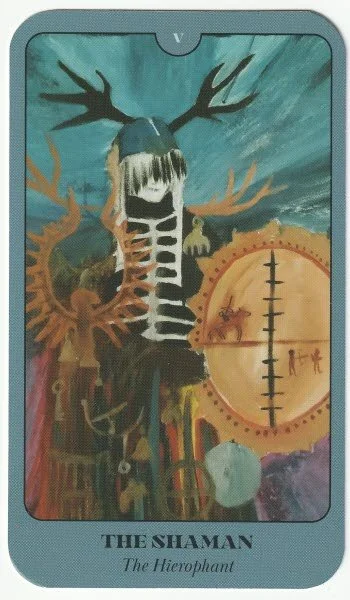
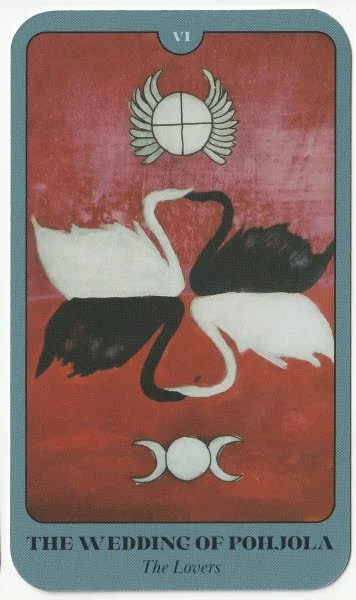
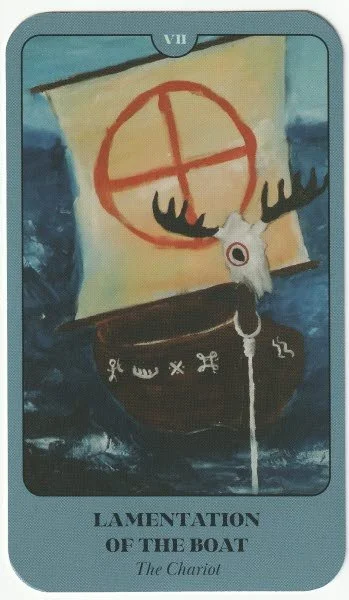
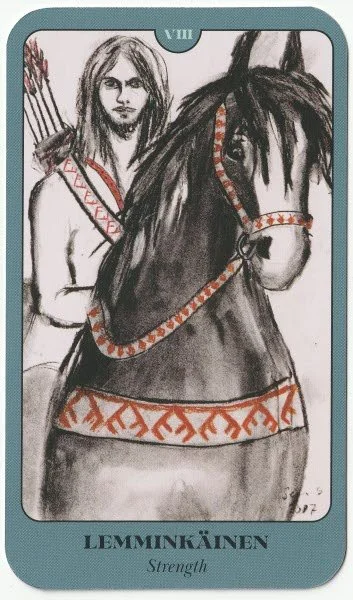
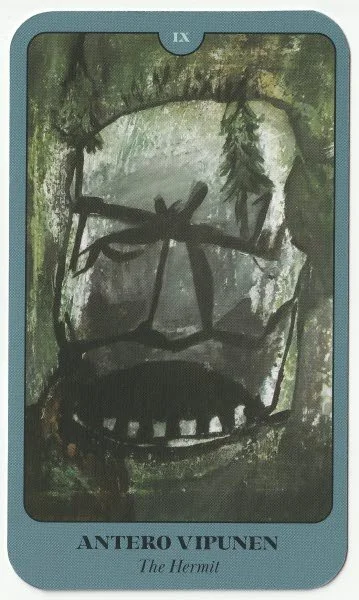
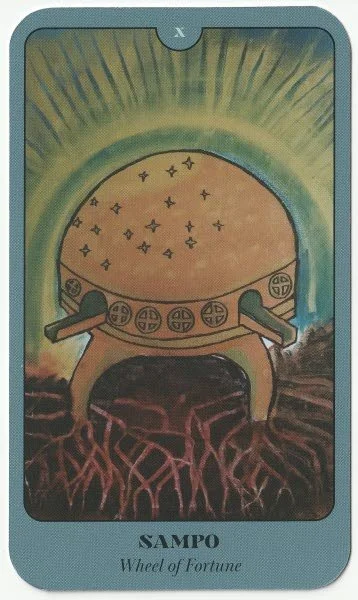
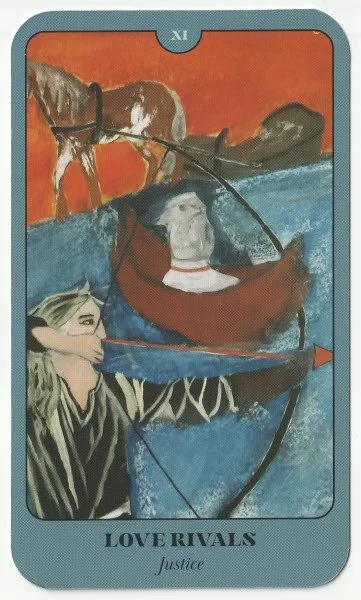
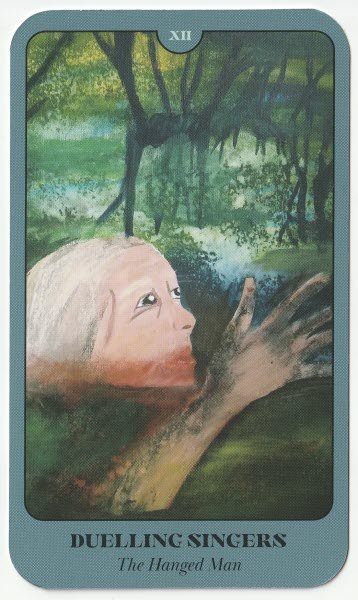
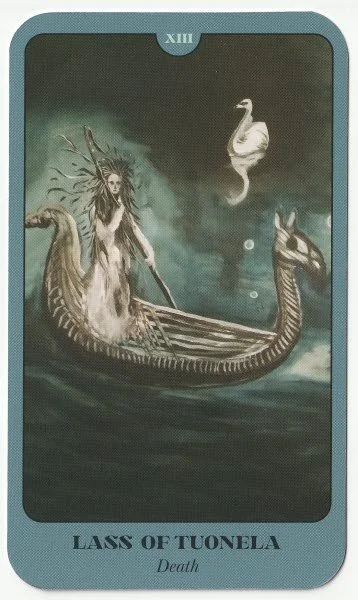
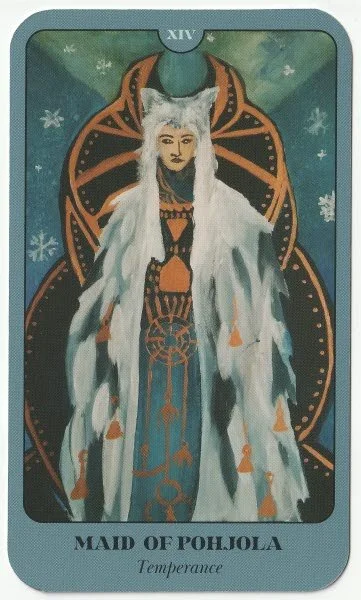
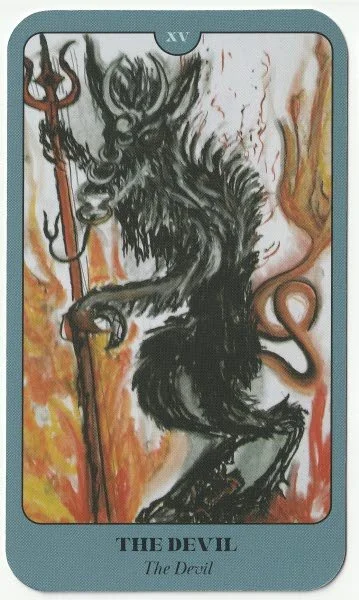
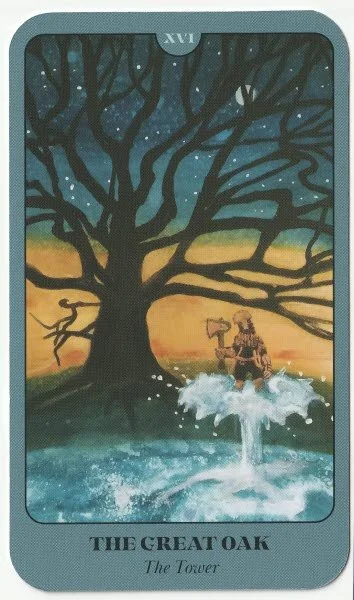
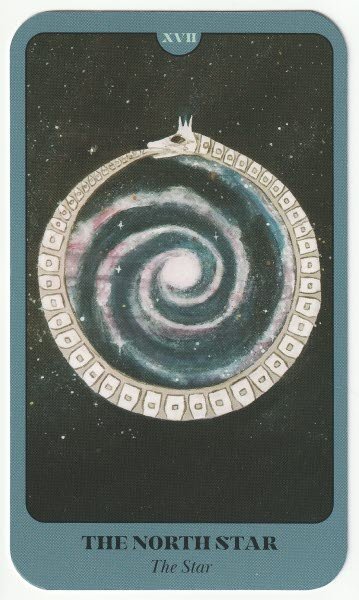
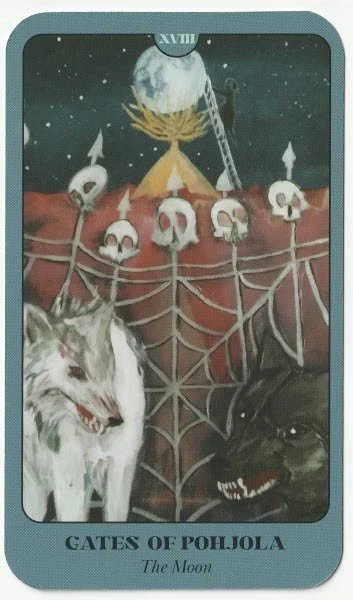
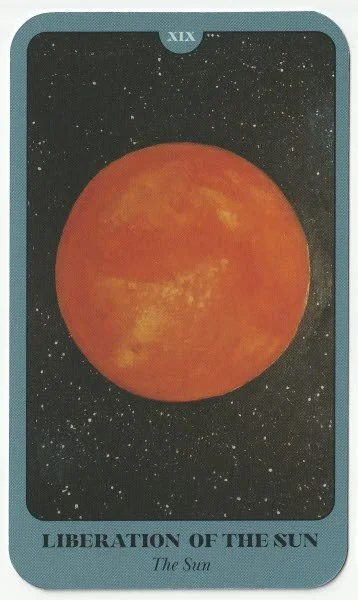
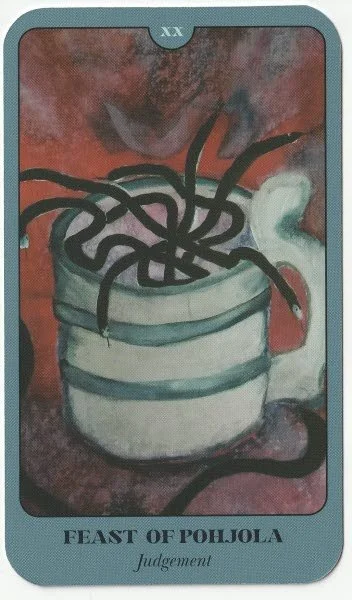
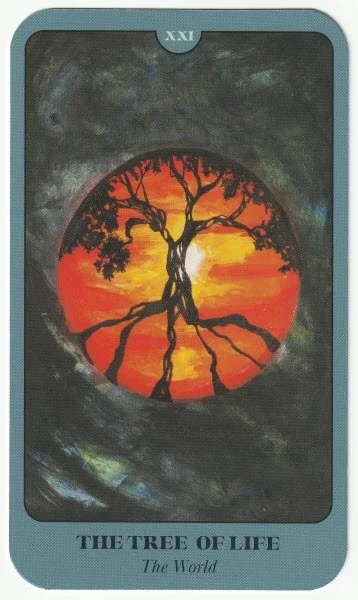
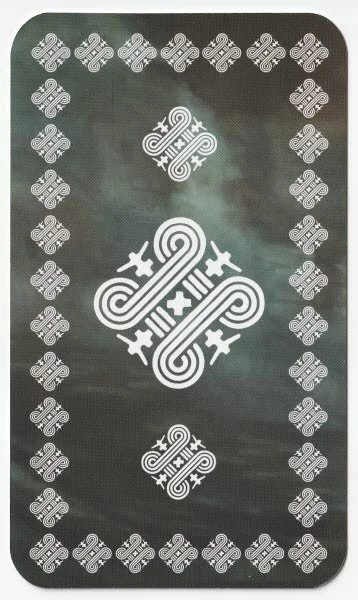
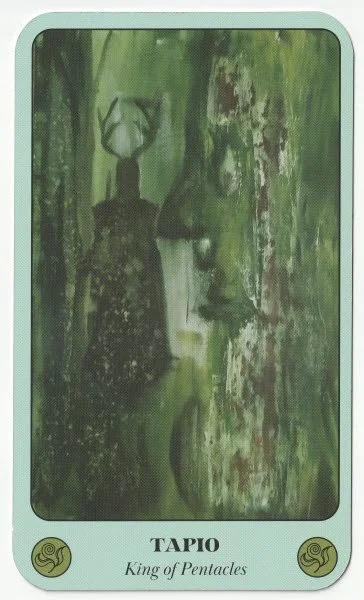
The cards in the major arcana each have a title, but the original card name is printed underneath. All majors have a blue background and border to distinguish them from the minors, which are green. There are so many cards in this deck that fascinate me. Susanna has definitely created a deck that embraces a darker edge of Finnish mythology. I like it because she hasn’t tried to sanitise it in any way. Each of the cards is named with its traditional tarot meaning, but there is also a Finnish name — some are actual characters from myth, others are named after events. There is a full two pages for each card that show the card, give details of the myth, and finish with a message that takes up roughly half a page. I don’t want to basically reprint the book here, but I will give a paragraph or two. So many cards deserve more than a passing mention, which is in itself a good sign. The High Priestess/Mother of Lemminkäinen: “The love of a mother was able to conquer death through powerful intuition and strong will. She conversed with the moon and sun, representing the subconscious and the conscious, leading to a wise, comprehensive understanding of her situation.” For The Empress, Susanna has gone way outside of any comfort zone and chosen Louhi as the counterpart because she’s the goddess of death and disease. It seems to be suggesting that feminine power is something wild and formidable rather than nurturing and abundant. It should come as no surprise that The Hierophant is renamed as The Shaman. I love the colour work on The Lovers/The Wedding of Pohjola. The black and white swans, mirroring each other while reflecting the opposite colour in the water, are beautifully rich in symbolism. The deep red background adds to the card’s intensity and offers another layer of meaning. The Hermit/Antero Vipunen stands out for me. There is an absence of anything resembling a light source, books, or other items traditionally associated with an inner journey or wisdom. Antero Vipunen is a sage who has been dead for so long that trees are growing out of him. Interpreting this card with the depth it deserves would require some background knowledge of his story. Justice is an interesting one because Susanna has given the additional title of ‘Love Rivals’. Turning to the guidebook for clarity, the message of the card talks about demands and expectations coming from several directions. Trust your inner judgement about what supports your own spiritual growth in the best possible way. I’m quickly realising that while the guidebook is good, I want to know far more about the stories behind the artwork and title choices. This is a deck that requires commitment.
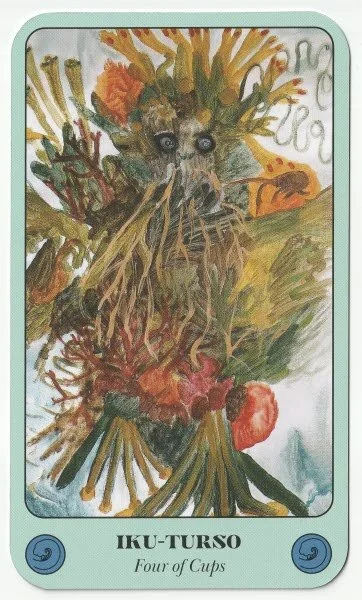
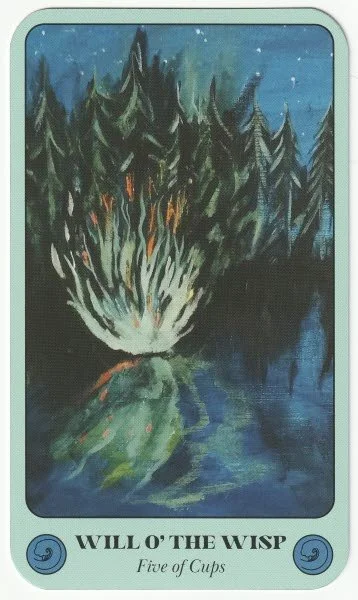
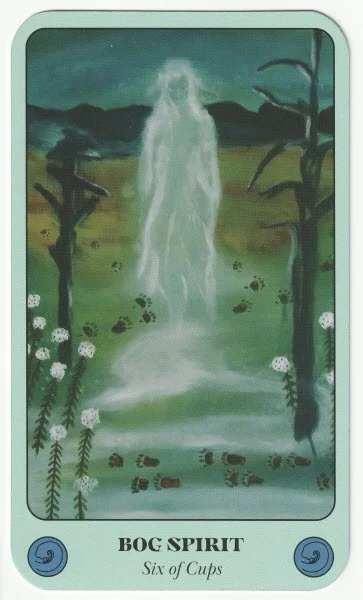
The minor arcana are heavily illustrated, and like the majors, they have a card name and their traditional title. The cups are probably my favourite suit. The Two of Cups/Spring Spirit is a lovely-looking card with an ephemeral quality. The Four of Cups/Iku-Turso is slightly jarring due to its earthy colour scheme, which seems superficially out of place considering the watery nature of the cups. But, Iku-Turso is a sea monster, and a malevolent one at that. I like the artwork for the Five of Cups/Will O’ The Wisp. It feels really serene and weirdly comforting. The guidebook interpretation centres around being present in the now, and I wonder if the fir trees in the background are also suggesting a need to call on ancestral wisdom or at least let the focus shift to what is everlasting.
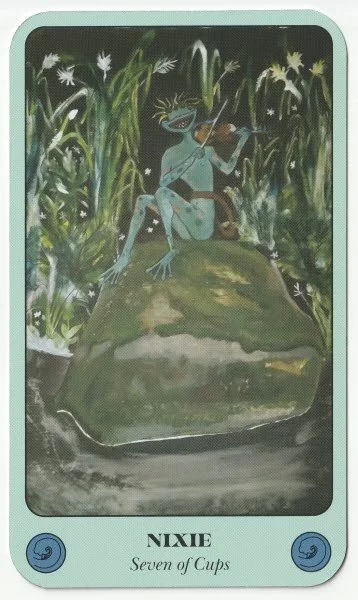
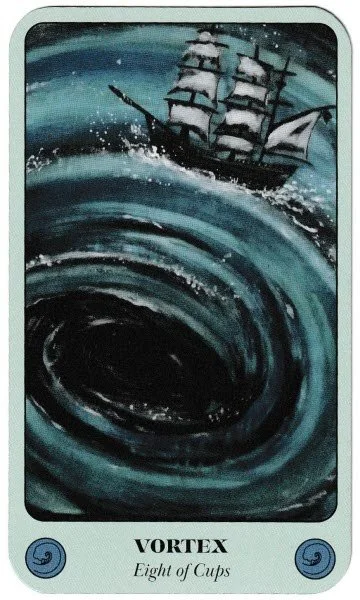
The Seven of Cups/Nixie is actually fun-looking, and we can see an impish character sitting on a rock playing a fiddle. I especially love the guidebook message that things are not as they seem, and the card may well be saying that you’re not seeing things clearly. I absolutely love the Eight of Cups/Vortex, but then I’m all about whirlpools and ships and anything that hints at a challenging sea crossing.
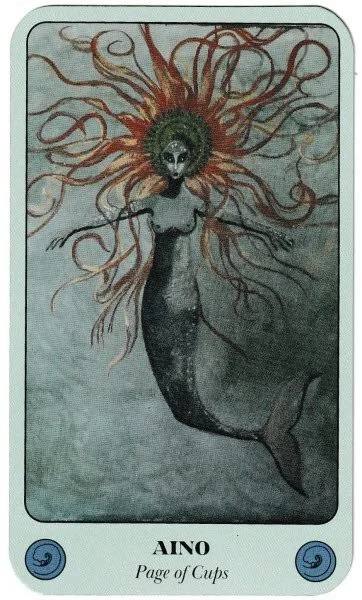
Like so many of the cards, the Page of Cups/Aino departs from the more traditional interpretation and warns against bad compromises. Aino drowns herself after fleeing from an impending forced marriage to an old man. The name Aino was invented by Elias Lönnrot, who was responsible for compiling the Kalevala, which is considered to be the national epic for Finland and Karelia. The name Aino means the only one, and the guidebook emphasises the need to defend your freedom and trust your intuition. It’s like Susanna has cut away much of the surface noise of regular tarot interpretation and found the darker side.
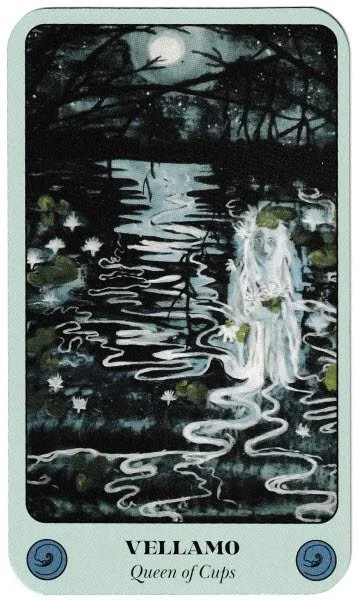
Finally, from the cups, I need to mention the Queen of Cups/Vellamo because the artwork is so lovely and it’s definitely one of my favourite cards. Vellamo is the mother of water, and the guidebook gives keywords of sincerity, love, care, and expressiveness. The description and message talk about being guided out of polluted waters and into something cleaner and calmer. This card would be an excellent one to pull in a spread if the question centres around your emotional development.
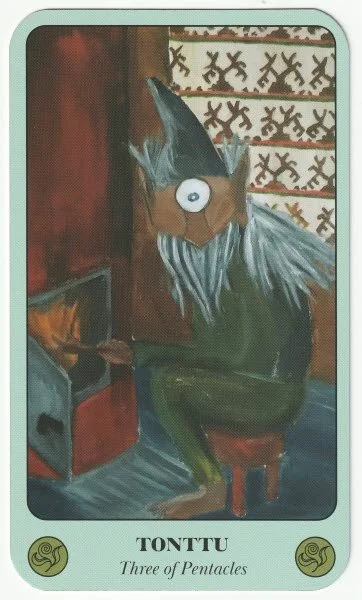
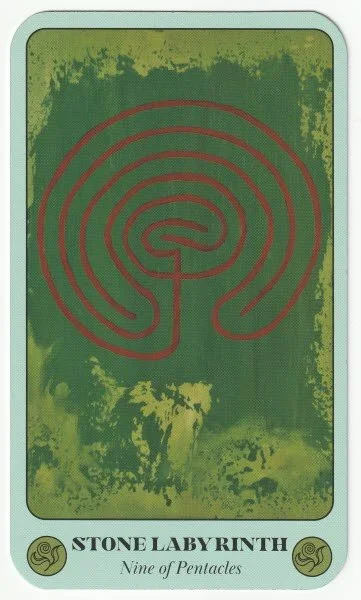
There are two cards from the Pentacles I want to mention, and the first is the Three of Pentacles/Tonttu, who is a one-eyed gnome-like creature who is sitting poking the fire. The guidebook tells me he’s an elf of sorts and generally helpful around the home. I like that there is the suggestion of help from unseen quarters alongside the more traditional ‘teamwork’ interpretation. The second card is the Nine of Pentacles/Stone Labyrinth, and I have to mention this purely and simply because of the art and title. I absolutely must look into the Finnish versions of the labyrinth because I’ve only recently finished a book on Ariadne, who helped Theseus find his way through the Cretan labyrinth to kill the Minotaur.
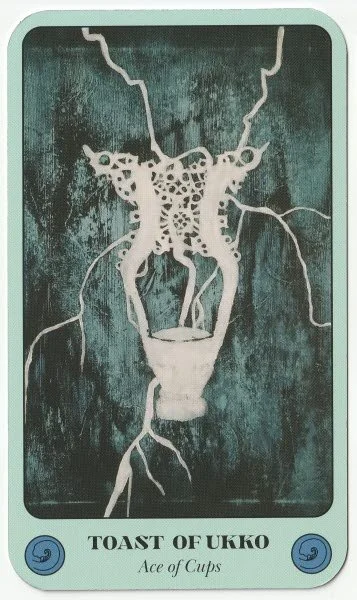
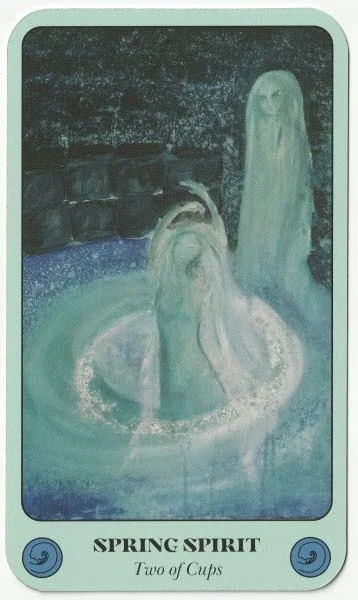
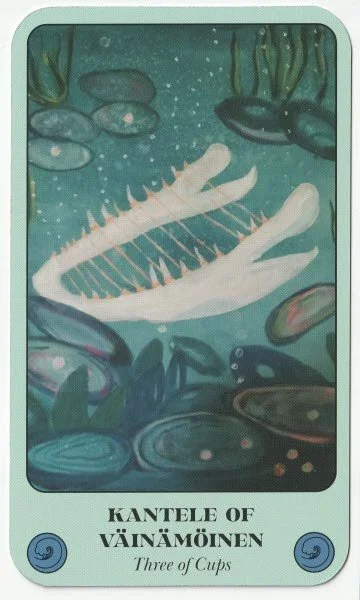
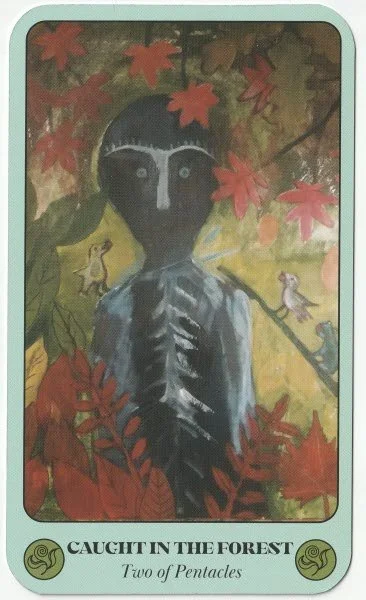
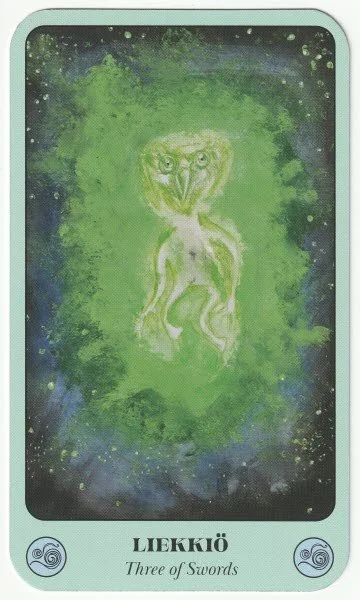
The Swords are a decent offering. The artwork for the Three of Swords/Liekkiö doesn’t immediately prompt me to associate this card with betrayal, heartbreak or separation. Again, we need the guidebook or knowledge of Finnish folklore because Liekkiö is the ghost of a child who was buried unbaptised. Often, as a consequence of being born to an unwed mother who killed it and buried it to conceal the sin. The message in the guidebook does say this card represents losses connected to relationships or feelings and asks that we face our buried memories. Susanna also mentions that whatever we’re doing, we may not have the approval of the tribe.
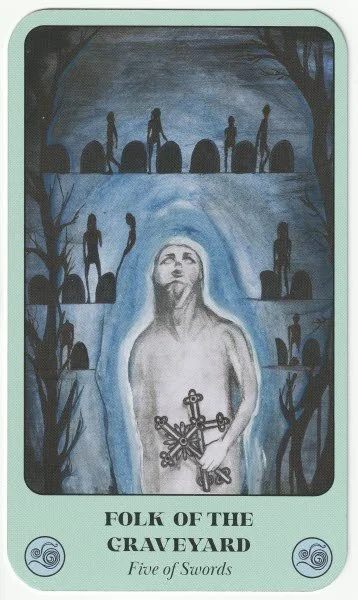
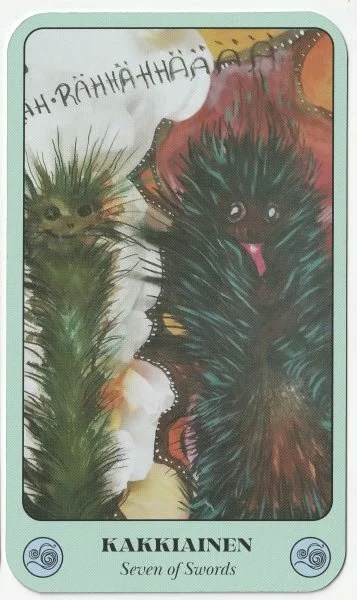
I’m intrigued by the artwork for the Five of Swords/Folk of the Graveyard because it stands in stark contrast to much of the deck. The figure holding a pair of crosses with several layers of gravestones behind him looks human and more relatable than the mythic creatures scattered throughout. The guidebook stresses the need to let go of the past and to forgive oneself and others. I can see how this fits in with the traditional meaning as an underlying layer. The Seven of Swords/Kakkiainen shows two odd creatures who are representatives of kakkiainen — in Finnish mythology, they are tiny ghosts that cause difficulties and disturbances. It doesn’t seem to be an exceptionally negative card, and if anything, the suggestion is to go high, rather than low.
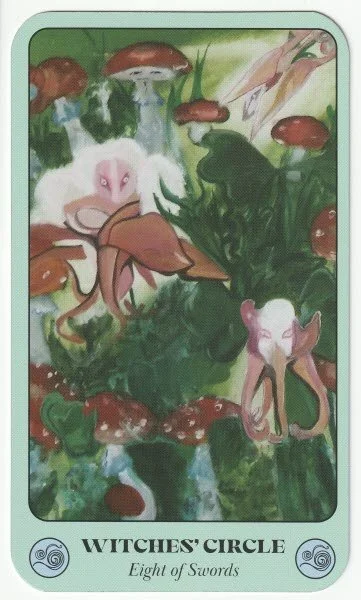
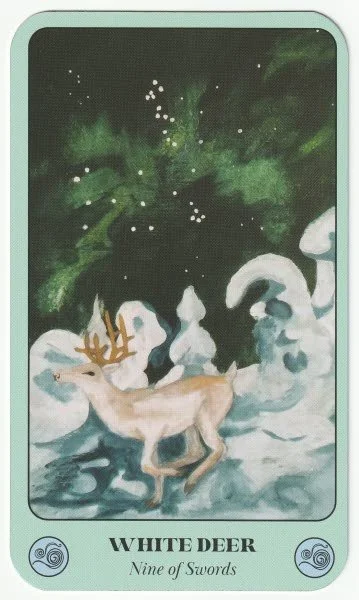
The connection between the Eight of Swords/Witches’ Circle is interesting, and the guidebook explains differently to what I had assumed. It speaks of negative patterns and a need to expand the current thinking. I mean, the book kind of falls into line with the general interpretation of the card — I’m just surprised it used the witches’ circle as a descriptor. But then, I should’ve remembered that folklore had some pretty intense beliefs attached to unusual natural occurrences. The Nine of Swords/White Deer feels like an escape route from what is usually a difficult card. I’m intrigued that the guidebook has this one down as a positive card, and I wonder if there’s a suggestion here that the Nine of Swords can actually be avoided if one pays attention, or if we choose the spiritual path over the demands of the physical status-driven path?
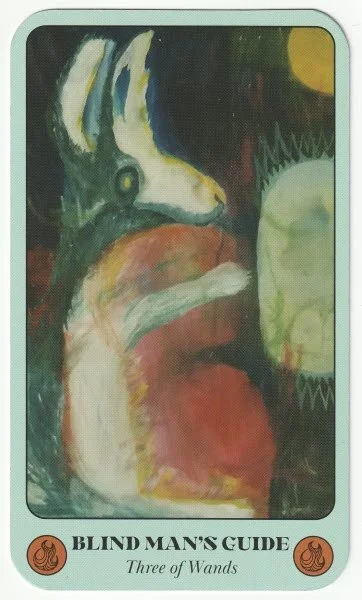
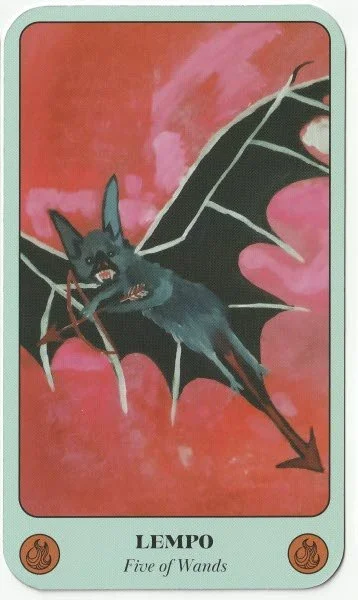
Finally, for the Wands, I want to look at the Three of Wands/Blind Man’s Guide because it’s one of those cards that frequently drives me nuts. The guidebook advice is to trust the inner guidance to move forward — we’re talking inspiration from dreams, weird incidents, and anything else that seems to come out of nowhere. This advice transfers to the traditional tarot effortlessly. The last card I want to mention is the Five of Wands/Lempo. In Finnish myth, Lempo is one of those characters whose meaning has shifted over the course of centuries. He’s generally considered a demon, but has connections to love spells, and I feel it's worth mentioning that Lönnrot wondered if he was in the process of becoming a love god before Christianity arrived. The artwork for the card resembles an angry bat, which immediately reminds me of the version of this card that indicates conflict. However, the guidebook talks about sexual attraction, infatuation, and a potential new lover. Curious indeed.
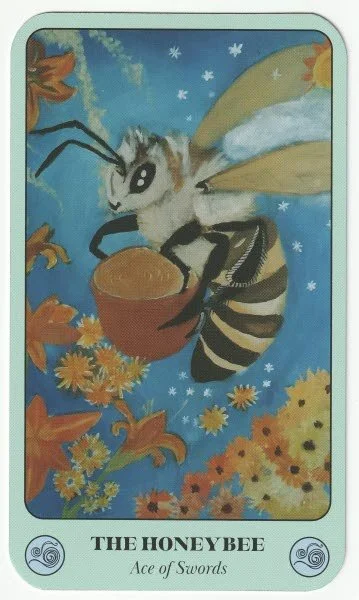
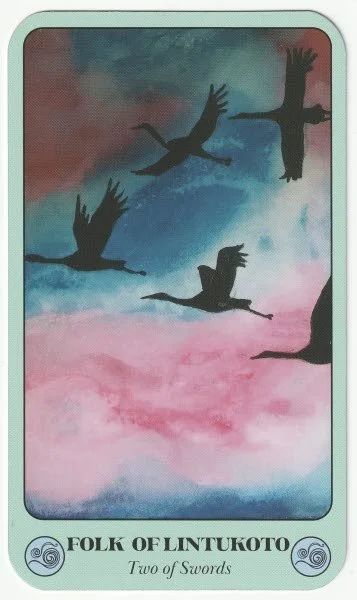
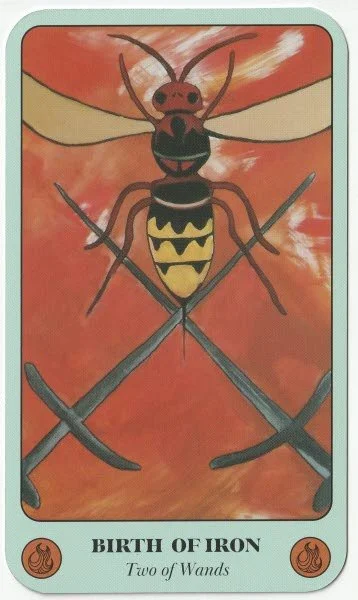
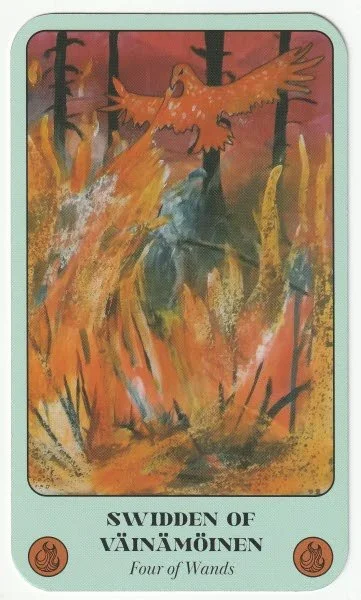
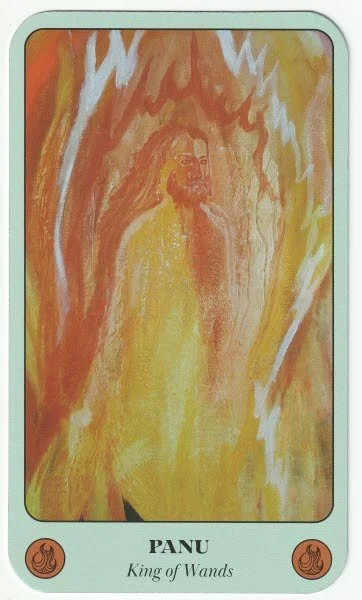
On the whole, I do like this deck. It feels personal, so I’m not sure I’d want to use it when I’m reading for others. It is not the most straightforward of decks, and not only because it’s rooted in Finnish wisdom, which I know nothing about. Finland shares borders with Norway to the north, Sweden to the west and Russia to the east — knowing what I know about how stories travel, the Mythologia Fennica Tarot has got me insanely curious to learn more about the Kalevala and what it can teach me about navigating boundaries and liminal spaces.
I like the artwork because it’s folklorey, and the art style fits the theme brilliantly. The artwork is pretty complex in places, so it doesn’t always lend itself to easy interpretation. While Susanna has given basic background information on the characters and events, we don’t get the full story. I can perfectly understand that it would’ve been impossible to do so, but I think if you’re going to work with this deck with the seriousness it deserves, you need to get a copy of the Kalevala. Finnish myth seems darker and more elemental than other mythologies I’ve looked at.
I think Susanna has done an excellent job of challenging the contemporary version of tarot. The deck is definitely suitable for honest self-development work, and there is a ton of significance in a whole heap of the cards that you just won’t find anywhere else. I see it as a brave effort, and Susanna has given us something genuinely original. I absolutely can’t let this one sit on the shelf gathering dust, and I need to put it to use.
I wouldn’t recommend this deck for beginners nor those who fear depth and shadows. If you have a love of mythology or knowledge of how Jungian analysts have used Greek and Roman myth, then I think it would offer a refreshing change of scenery. It’s a deck that demands engagement at a deep level, and although you could certainly use it for day-to-day issues, I think it would be a shame — akin to visiting a sacred place but not actually going to the sacred bit and sitting in a cafe and having lunch instead. I mean, have the lunch as well, but go to the spot. . .
Recent Posts





Archives
Categories
- AI Decks
- Animal-centred
- Books
- Decks For Self-development
- Difficult Decks
- Expensive Decks
- Lenormand Decks
- Oracle Cards
- Oracle Cards For Beginners
- Out-of-print
- Personal Favourites
- Published 2000s
- Published 2010s
- Published 2020s
- Tarot
- Tarot & Oracle Sets
- Tarot Cards For Beginners
- Under £15
- Under £20
- Under £30
- Under £40
- Witchy Decks
- Woman-centred

Details for the tarot and oracle giveaway for September 2026.